Lace Mobile
A light wallet mobile application for digital assets.
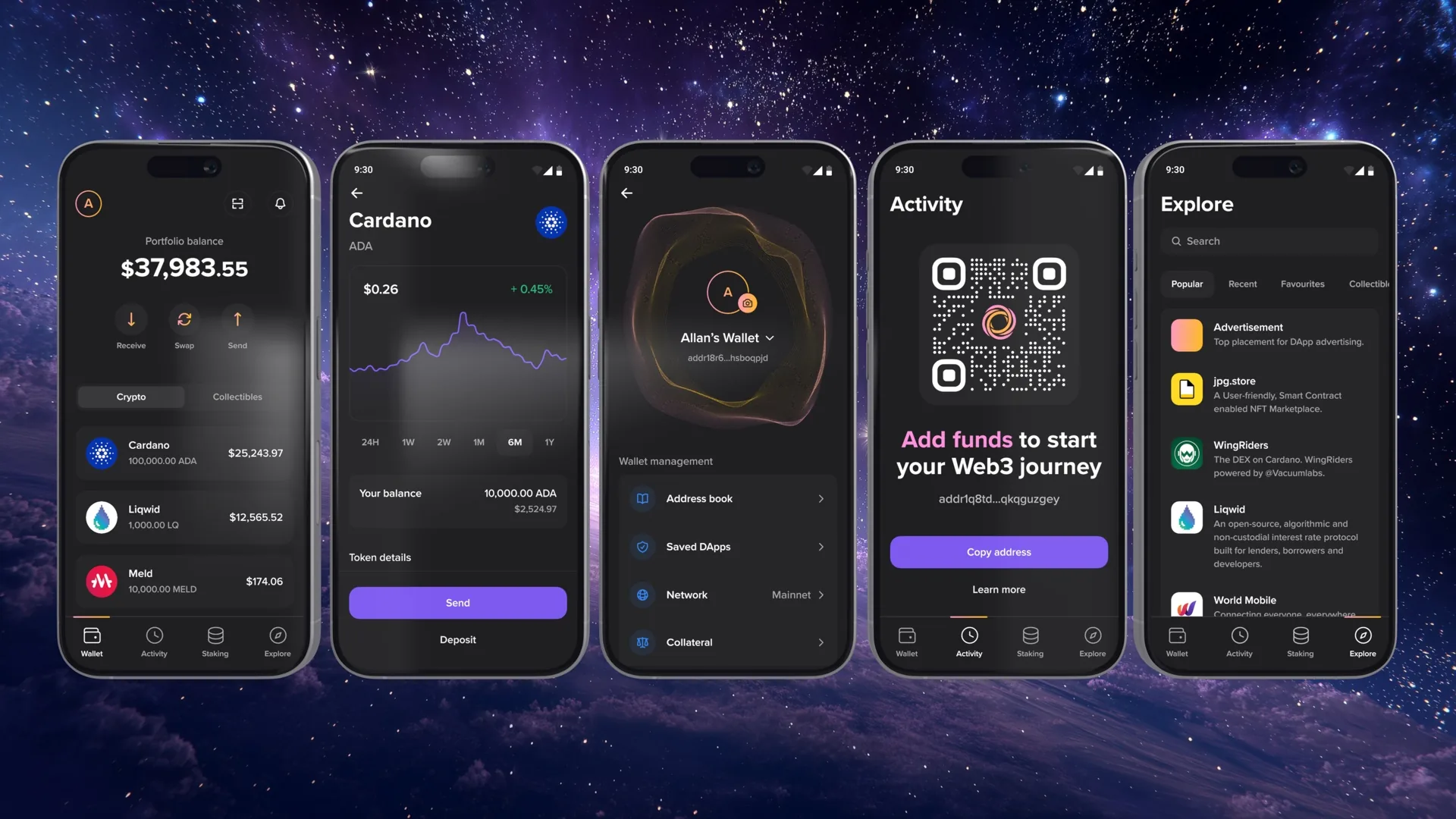
Following the successful launch of the browser extension, our developmental trajectory led us towards the creation of a mobile wallet. Extensive user research unveiled a compelling revelation: the three distinct platforms, namely the browser, mobile, and desktop, each harbored their unique user personas. While commencing with the browser wallet was strategically prudent, serving as a gentle introduction to cater to our existing user base, the subsequent stride aimed at capturing the attention of the next significant segment: the burgeoning community of cryptocurrency novices.
The problem
Amidst the ever-evolving landscape of the crypto world, a persistent puzzle has loomed large: the riddle of widespread adoption. Newcomers venturing into the ecosystem have frequently found themselves entangled in the labyrinthine intricacies of the blockchain system. It was against this backdrop that we were entrusted with the task of unraveling these complexities and crafting a gentler entryway for those venturing into the exciting world of cryptocurrency.
The solution
Given the prevalence of mobile phones in today's world, the overarching objective of the roadmap was to develop a mobile wallet. This wallet's primary purpose is to assist and streamline the experience of new users as they engage with the Cardano ecosystem.
New device, different use case
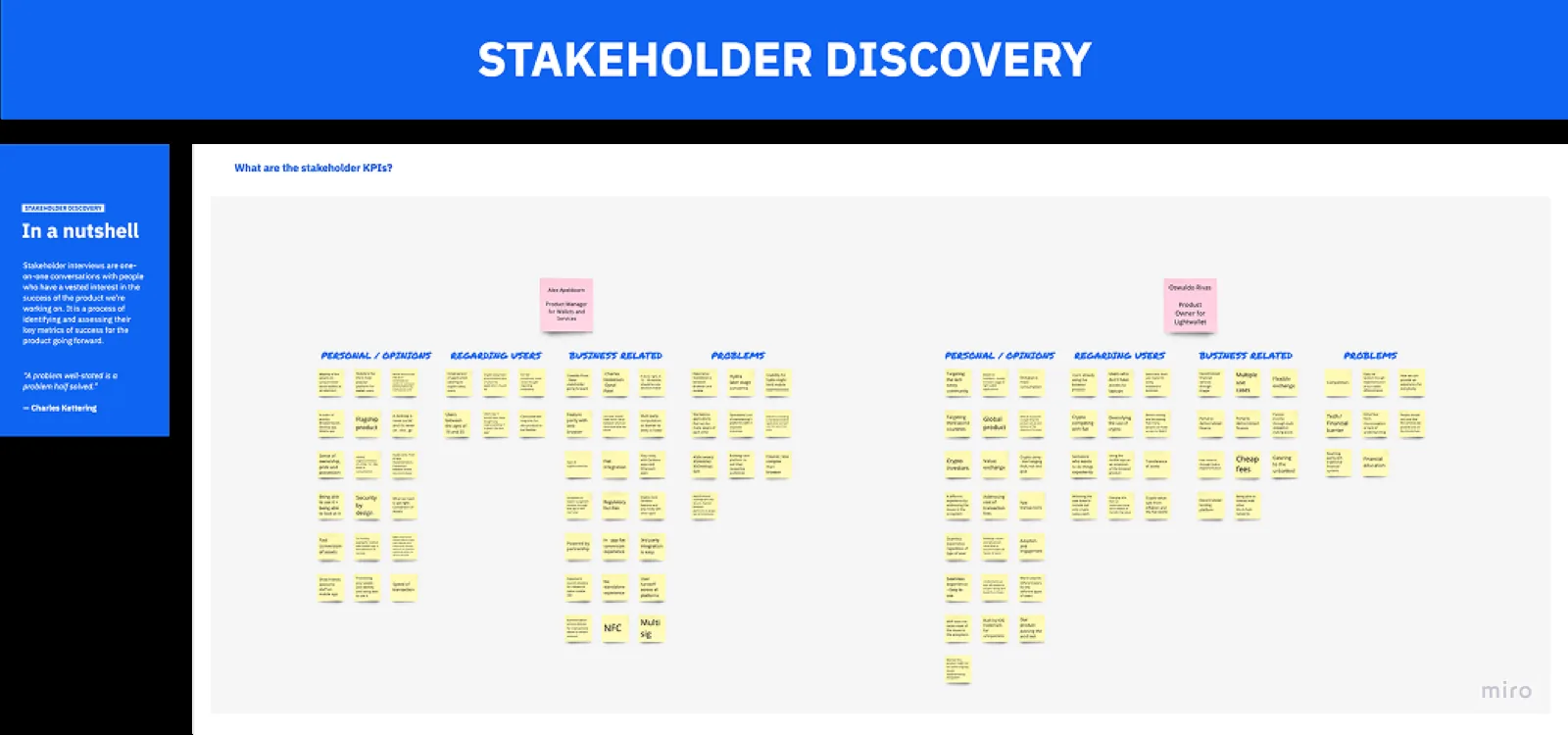
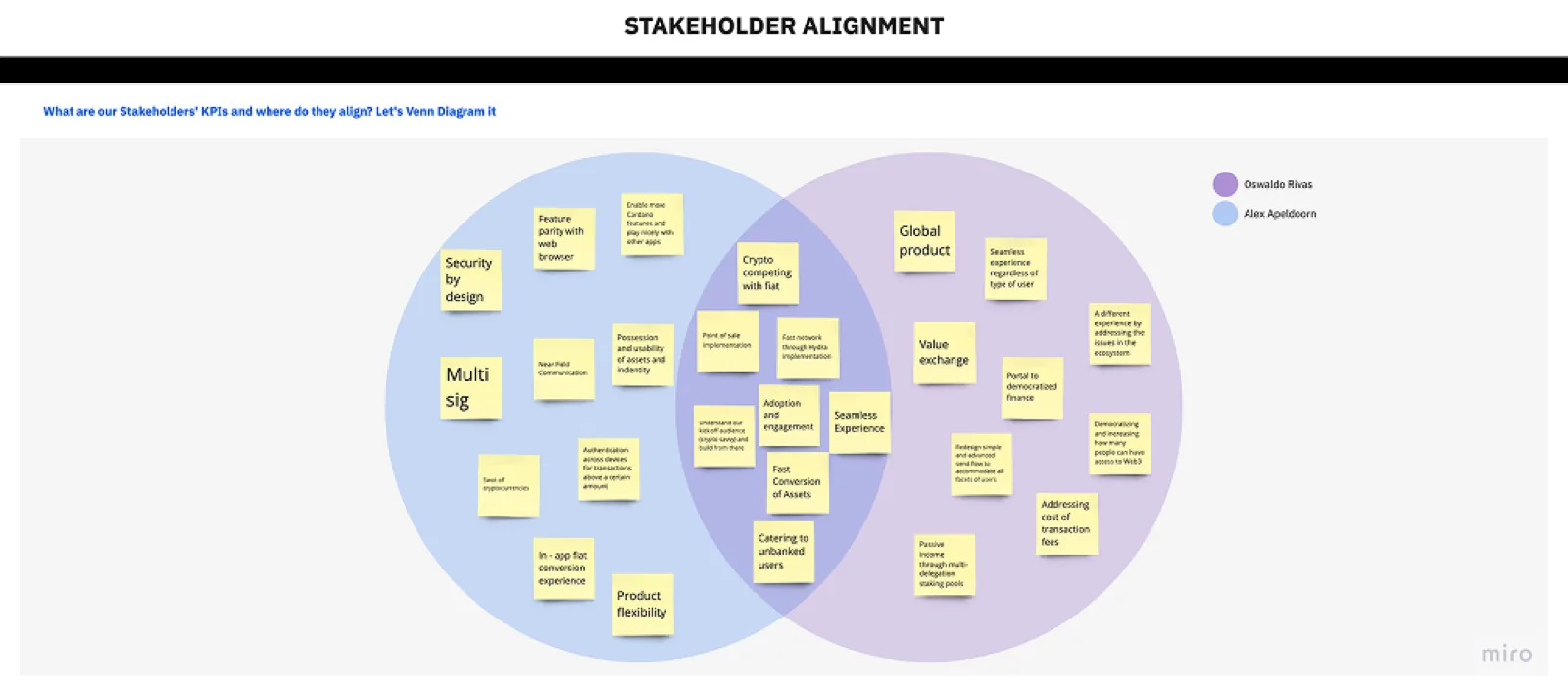
To gain a comprehensive insight into our forthcoming actions, we conducted a stakeholder interview. The primary objectives were to grasp our stakeholder Key Performance Indicators (KPIs) and to gain a deeper comprehension of the product's trajectory. Understanding the product's roadmap post the browser wallet launch was pivotal in discerning our market positioning and our current standing within it.
Speaking to our users
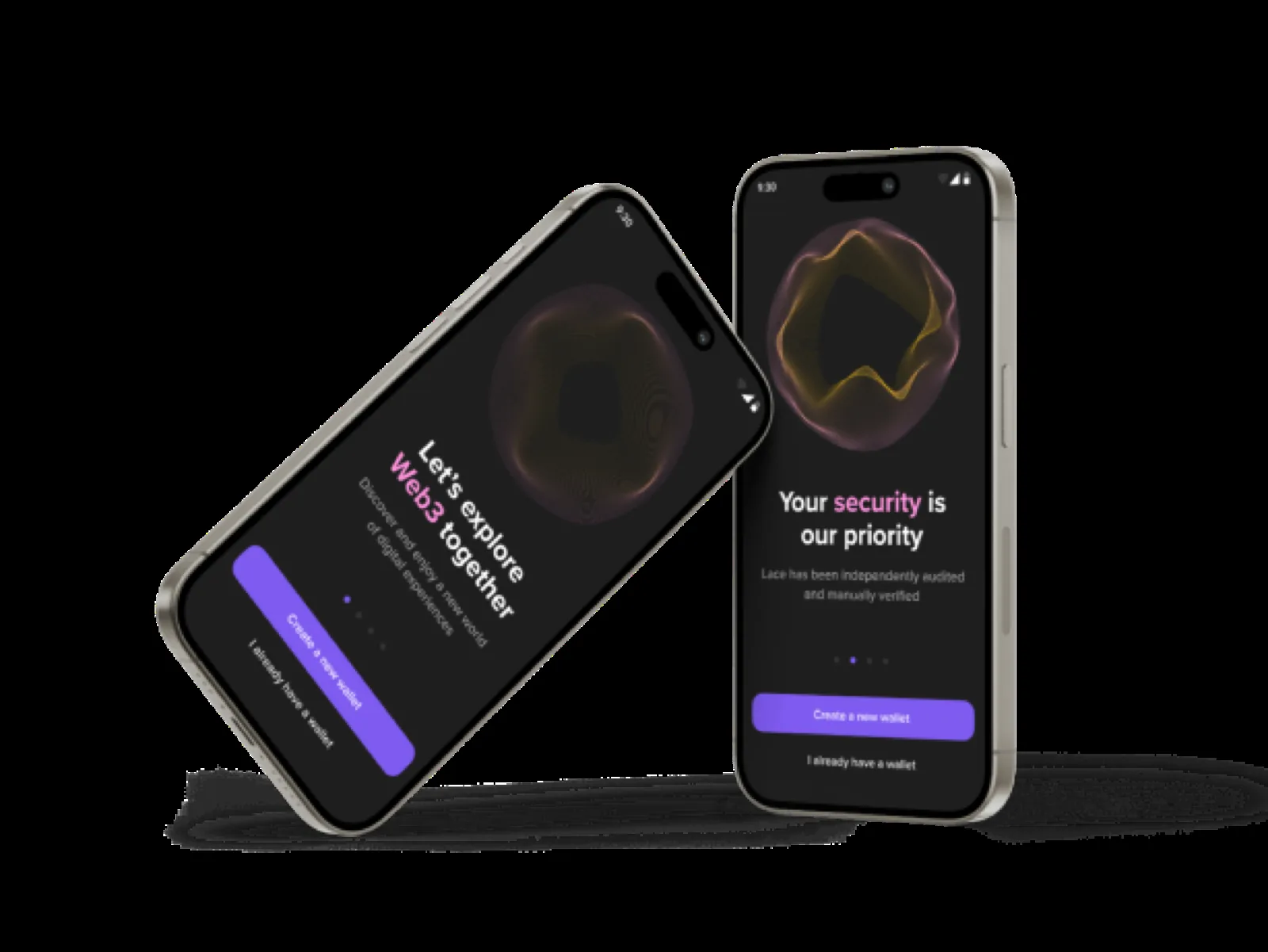
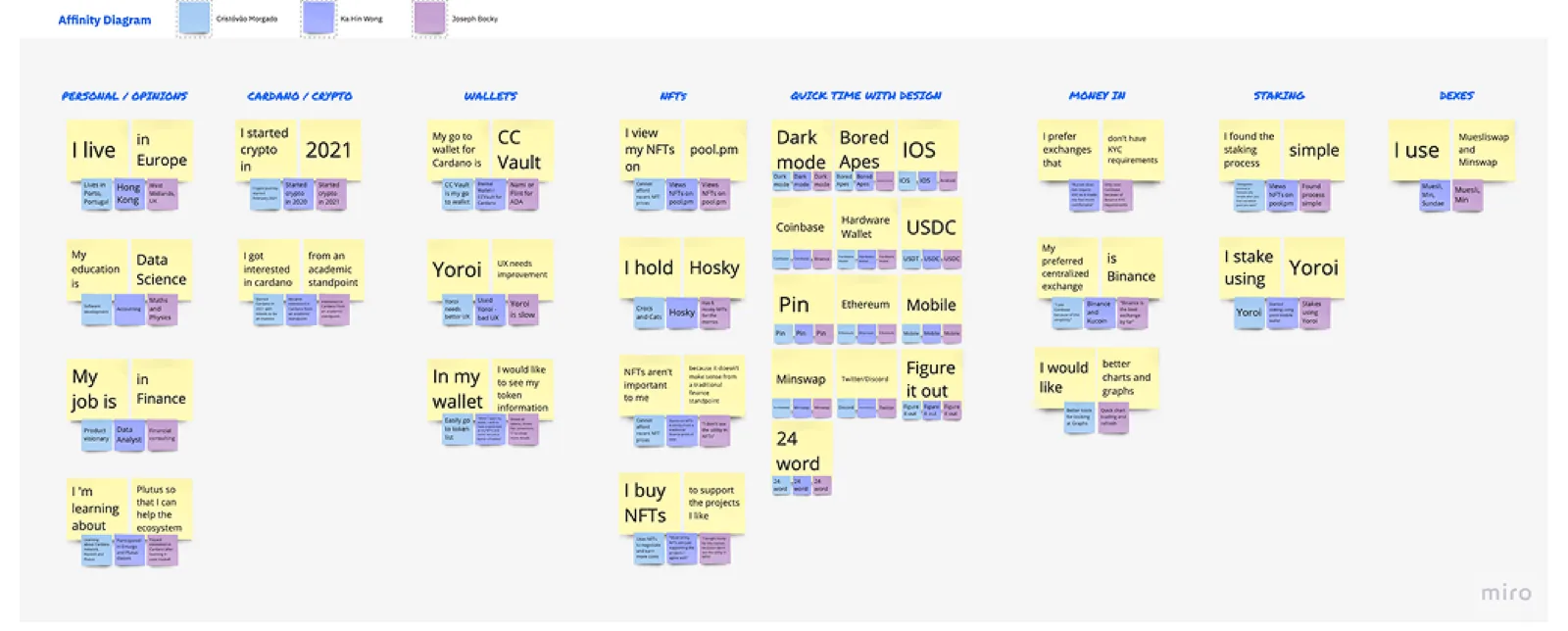
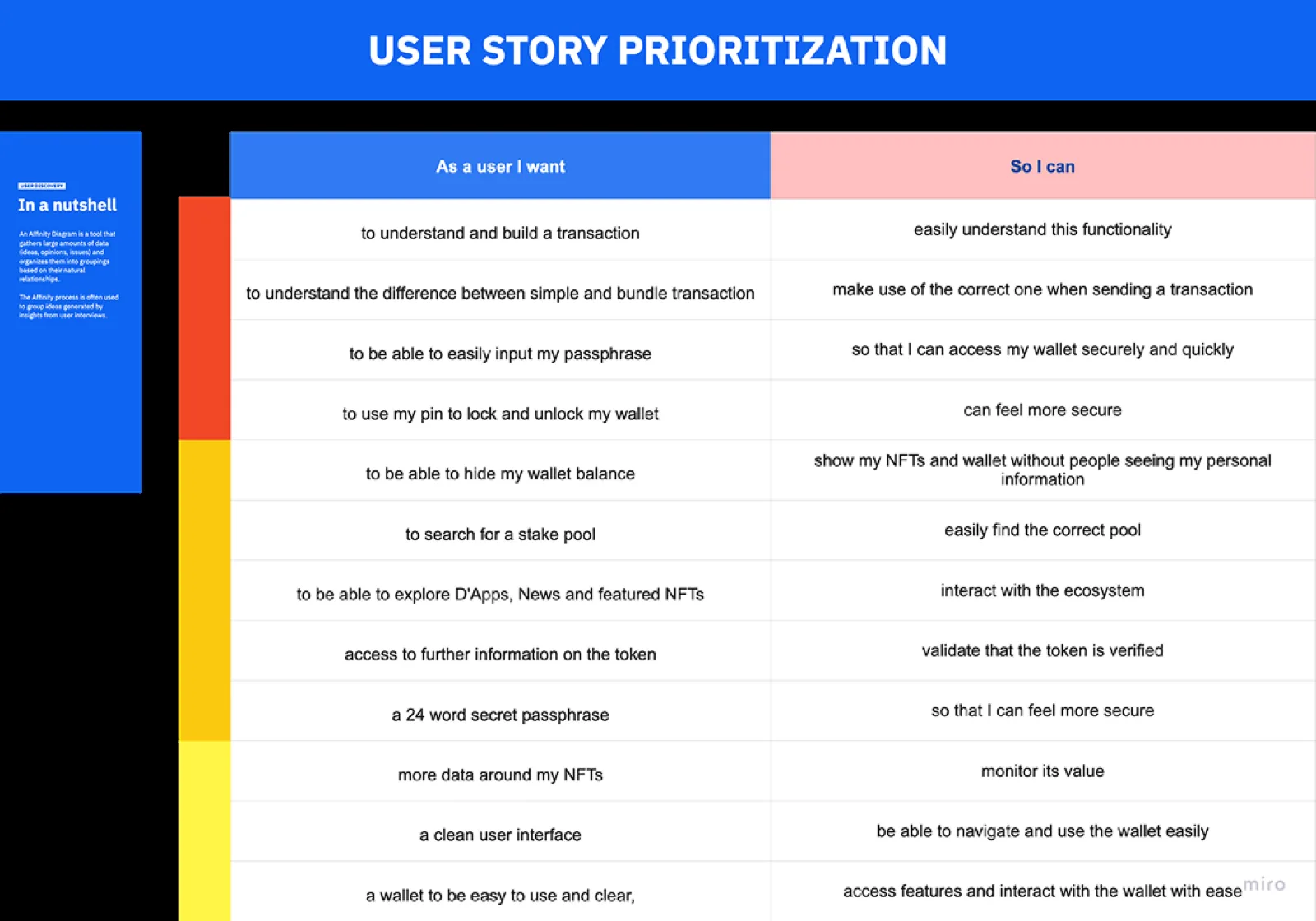
The synergy between stakeholder and user interviews is a pivotal aspect of our development process. While stakeholder interviews set the strategic direction, user interviews bring the user's voice to the forefront, ensuring the final product resonates with its intended audience. Talking to users based on our established persona for the browser wallet gave very insightful feedback; they were just as interested in adoption as we were. They wanted a wallet that is 'simple enough for even my grandmother to use'.
The competitive landscape
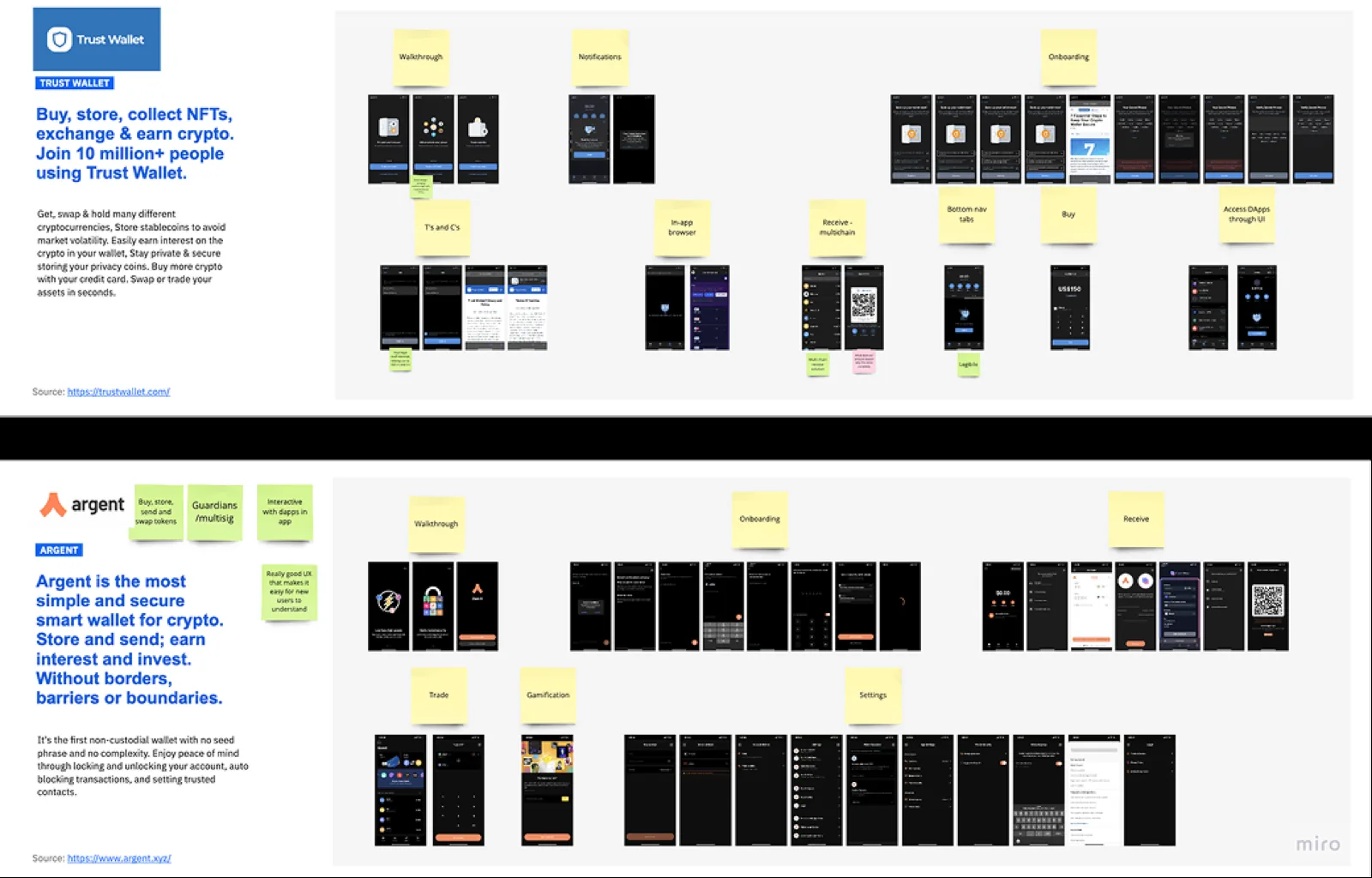
When we ventured into the market during that period, it was evident that we were already playing catch-up. Opting for a lean feature set during our product launch would have been detrimental. Thus, in pursuit of the insights needed to compete in a highly competitive market, we embarked on an exhaustive competitive analysis. This undertaking proved to be the most demanding and time-intensive phase of our design process thus far.
Testing repeatedly
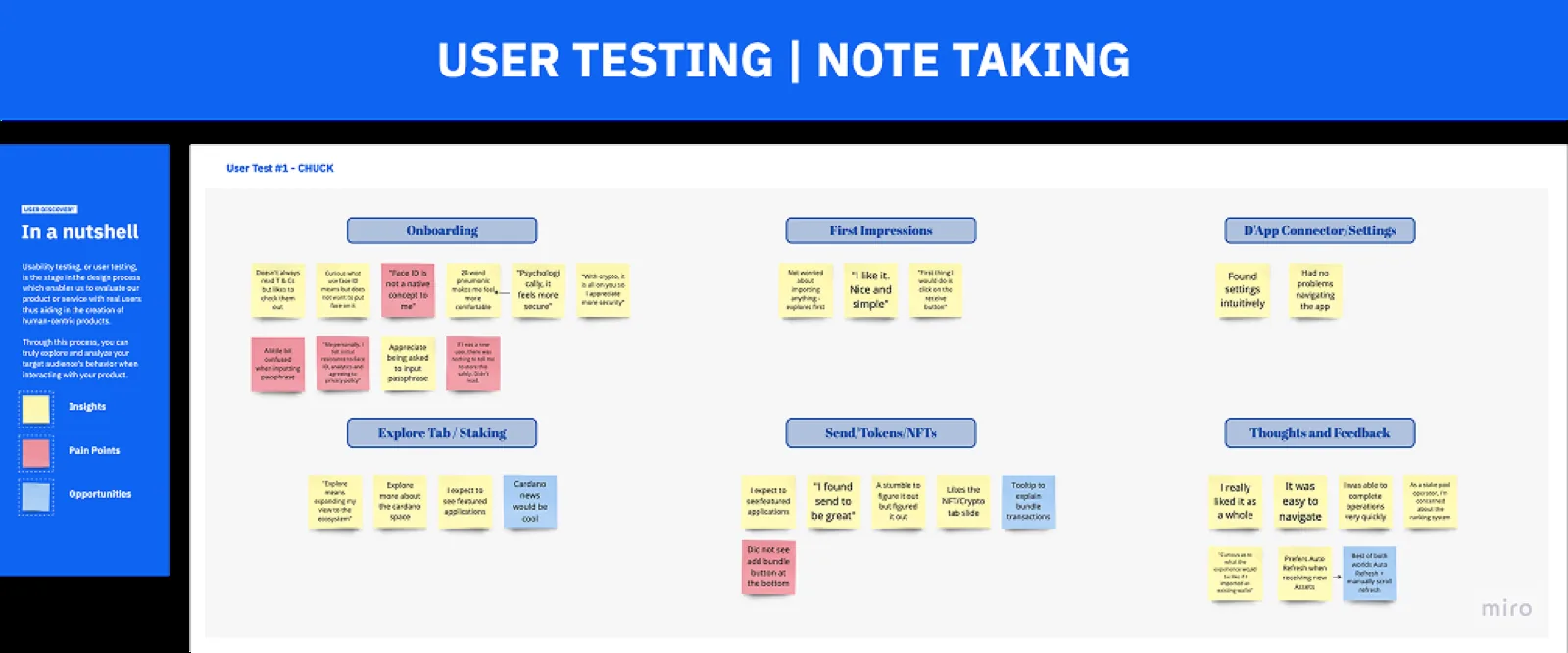
Developing for mobile always presents a captivating challenge. Despite having an established information architecture for the browser, the mobile platform required a distinct organizational approach due to its inherent complexities. Crafting and rigorously testing our prototype with a diverse group of users emerged as an imperative step to preemptively mitigate challenges and ensure a smoother post-launch journey.
Two platforms, same brand identity
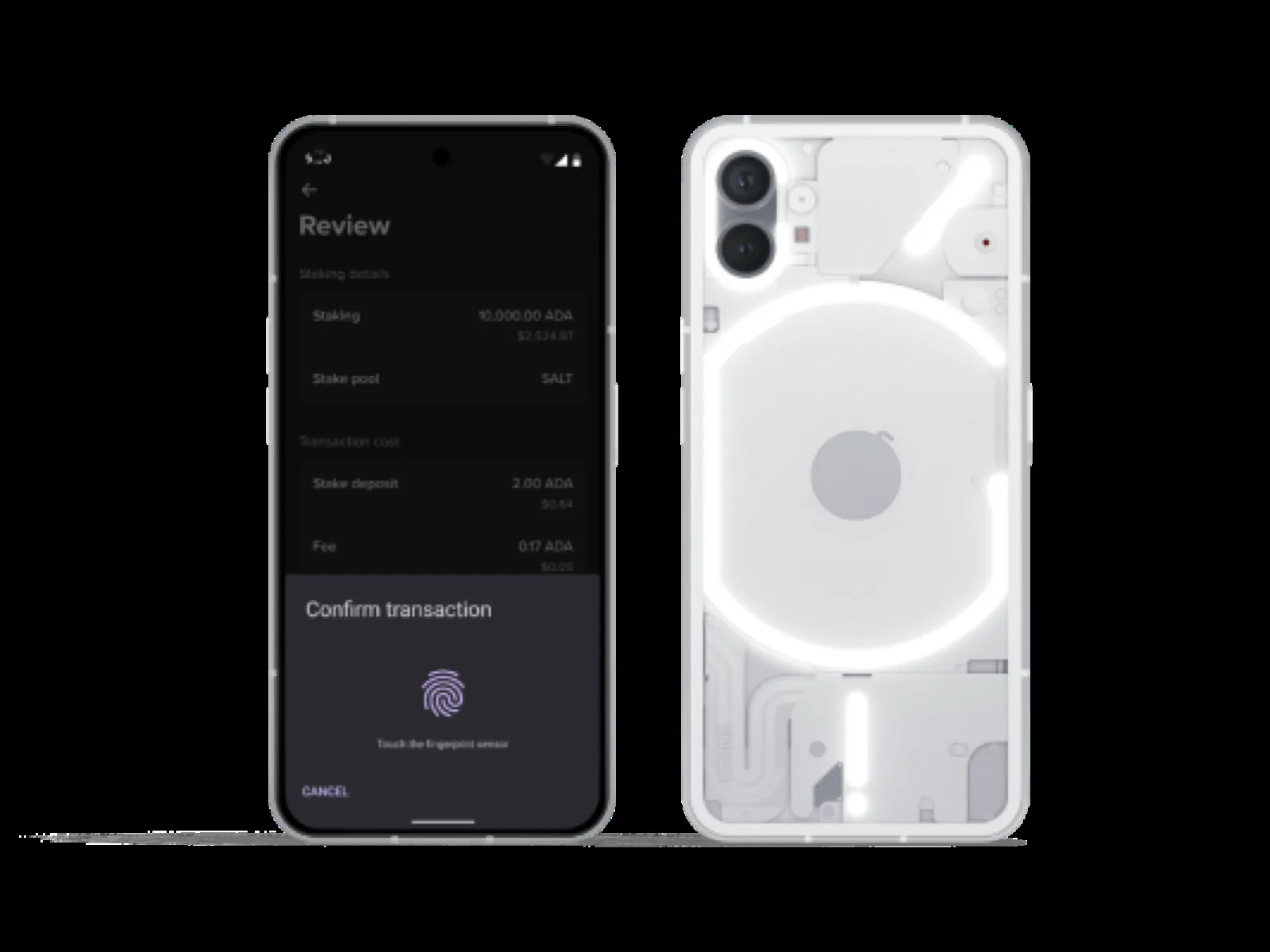
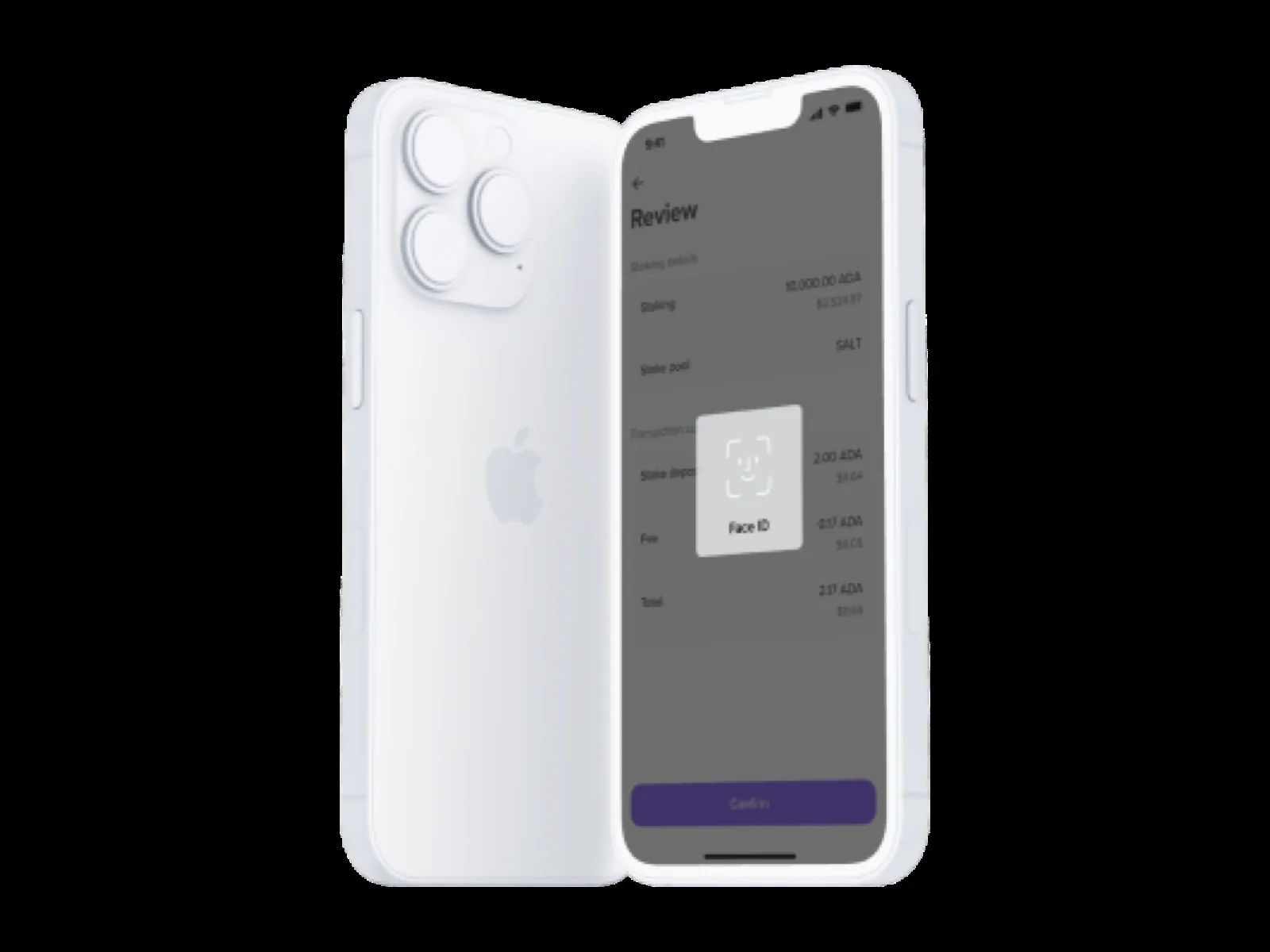
While addressing the distinctive challenges of iOS and Android development separately, our mission encompassed maintaining consistency in user actions across both platforms. This entailed identifying analogous native interactions and animations while crafting exclusive components when necessary. Collaboration with our developers was pivotal in ensuring that our designs adhered to specifications and seamlessly integrated native elements into the process.
Bundle transaction
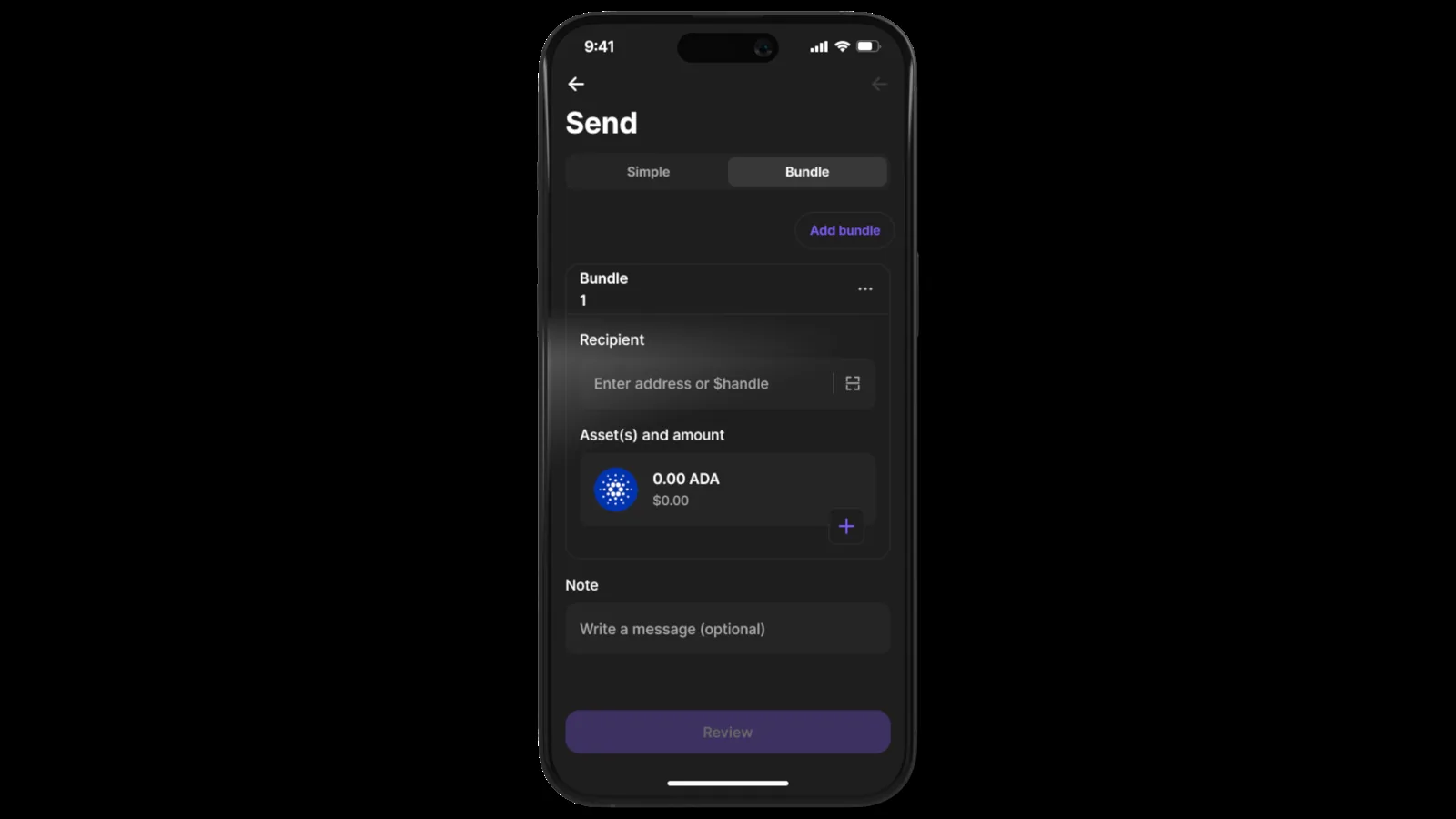
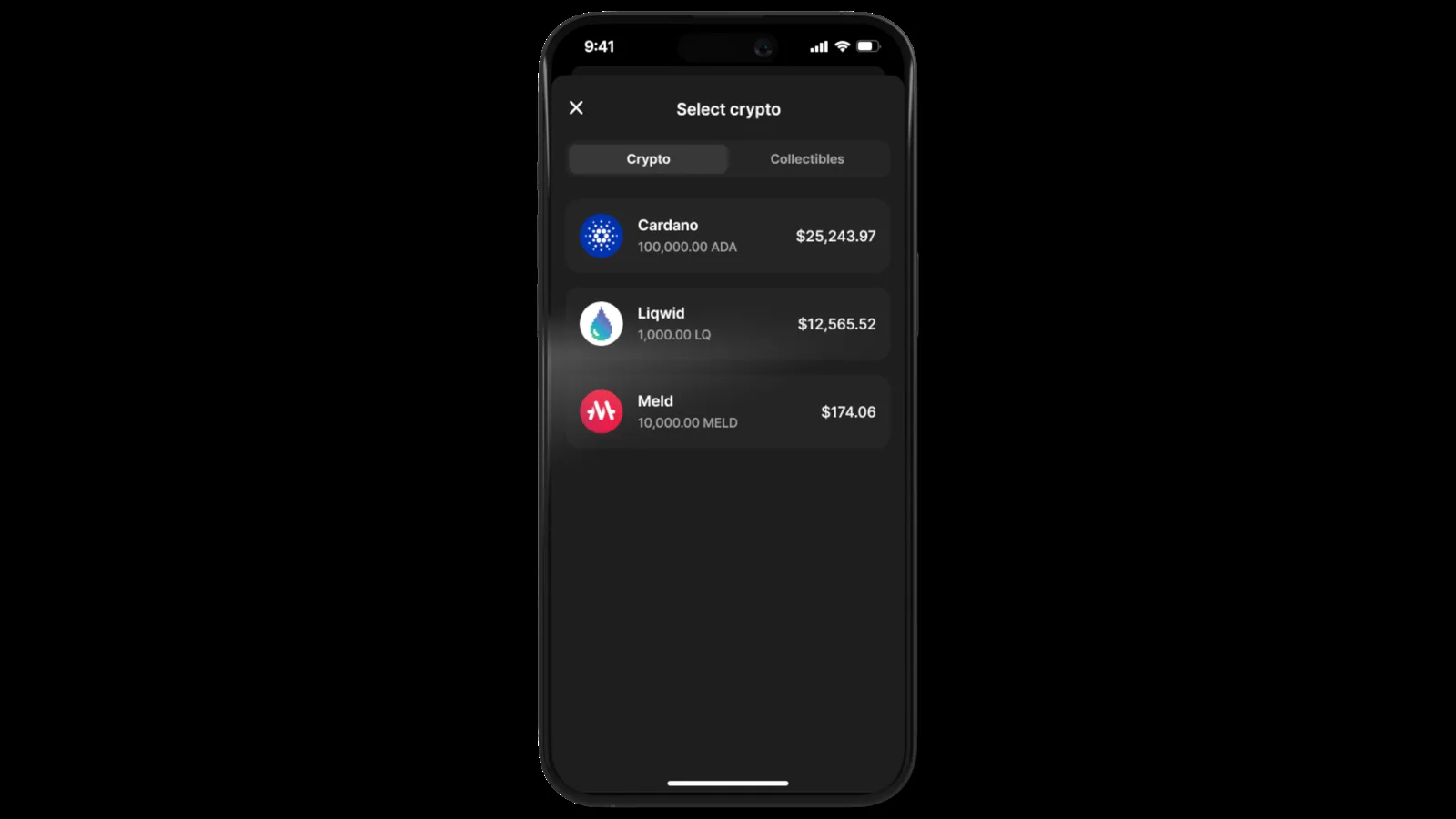
Designing bundle transactions for mobile devices necessitated a user-centric approach that accounted for limited screen real estate, touchscreen navigation, optimal user flows, responsive design, visual hierarchy, data input methods, feedback mechanisms, security considerations, performance optimization, and comprehensive testing. Addressing these challenges ensures users can efficiently and securely manage their digital assets on our mobile platform.
Staking ADA
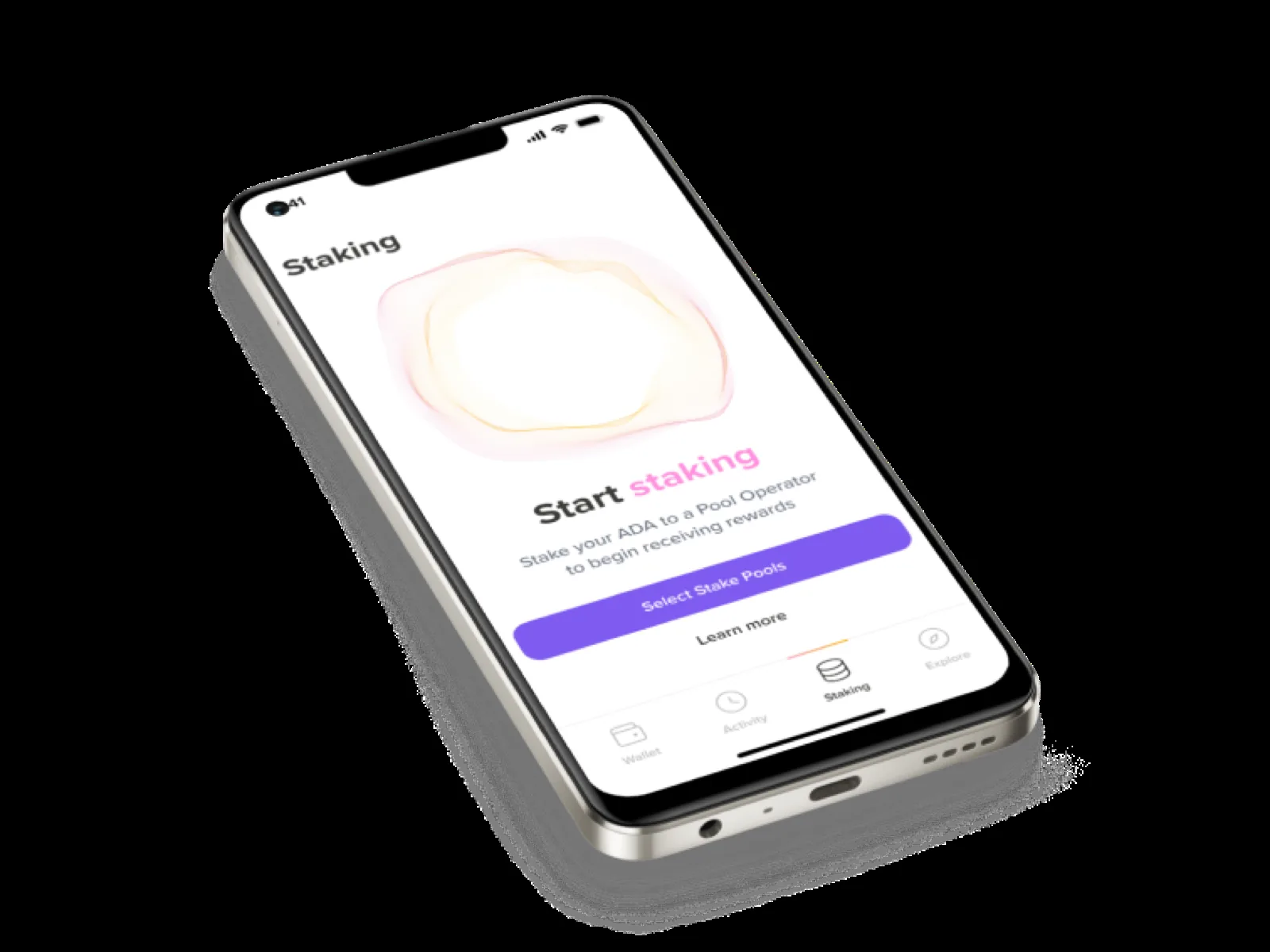
Creating a staking interface tailored for mobile devices encompasses a unique set of design challenges, stemming from the constraints of smaller screens and touchscreen interaction. We had to prioritize content and actions so users could access critical staking functions without feeling overwhelmed; design intuitive gestures for delegating, withdrawing rewards, and tracking performance; and present complex staking metrics clearly using interactive charts, concise summaries, and expandable sections.
Streamlined navigation guided users through the staking process seamlessly, responsive design adapted gracefully across devices, and robust, clearly-communicated security measures kept the experience trustworthy throughout.