Lace Web and Extension
An elegant, secure browser extension for managing digital assets.
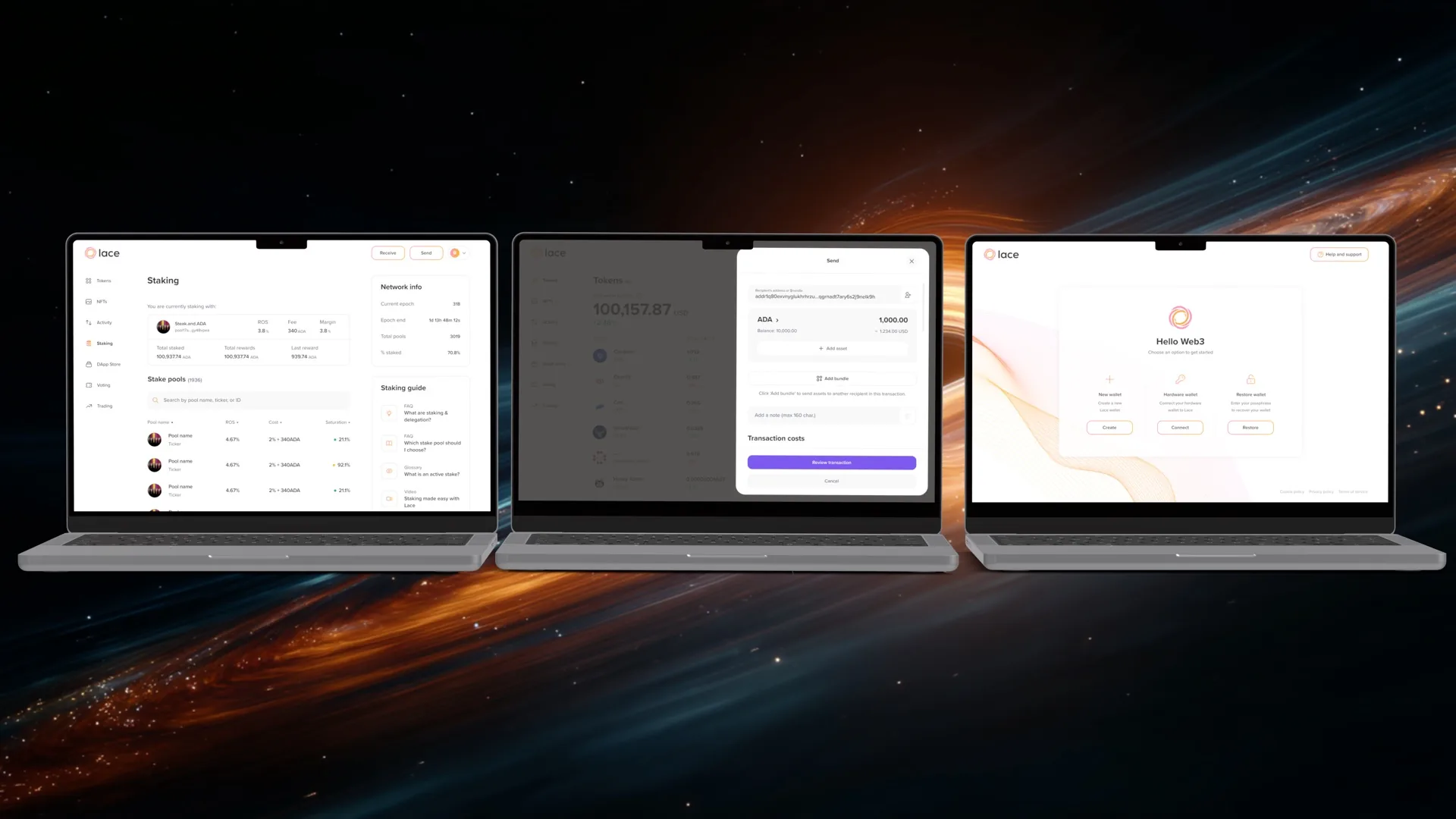
Our journey began with a simple but crucial question: how can we make managing digital assets as intuitive and delightful as possible? The result is a platform that marries elegant design with a user-centric approach. I obsessed over every detail of the interface to ensure that navigating through your digital assets feels effortless. From the moment you log in, you'll notice an interface that's not just visually appealing but also remarkably user-friendly.
However, security being paramount, we incorporated state-of-the-art encryption and authentication mechanisms to safeguard user assets, because we understand the importance of trust in the digital asset world, and every design decision we made reflected that commitment to users' security.
Problem
In the rapidly evolving landscape of digital asset management and cryptocurrency adoption, users faced a multitude of challenges that hinder their ability to securely and effectively interact with their digital wealth. These challenges include complexity and lack of accessibility, security concerns, diverse asset portfolios, lack of user-centric design, and trust and reliability.
Solution
Lace Lightwallet was poised to address the pressing challenges in digital asset management by offering a user-centric, secure, and accessible platform that caters to both newcomers and experienced users alike. The platform aimed at empowering both newcomers and experienced users to confidently and efficiently manage their digital wealth, fostering greater adoption and trust in the digital asset ecosystem.
Navigating a dev-centered ecosystem
In the ever-evolving world of blockchain technology, I found myself at the intersection of two seemingly disparate realms: user experience and developer-centric ecosystems. While blockchain promises groundbreaking innovations, it often leans heavily towards technical intricacies, leaving user experience on the back burner. My mission was to navigate this dev-centered landscape and catalyze a transformation in the way blockchain products and services prioritize user-centric design.
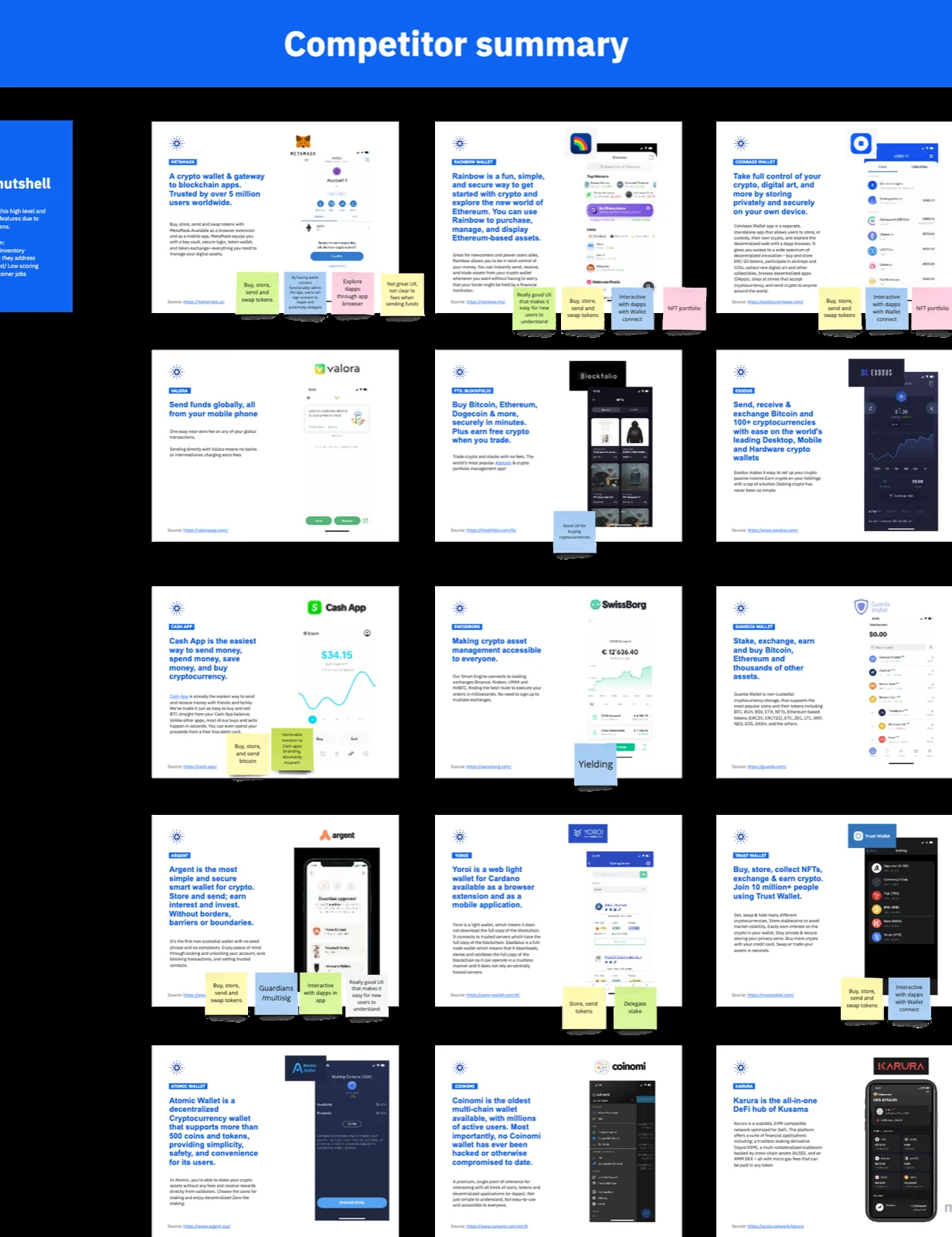
Complexity overload
The blockchain ecosystem is laden with jargon, complex processes, and intricate technical details, making it intimidating for the average user. This complexity hinders mass adoption. Striking the right balance between robust security and user-friendly design is a constant struggle. Blockchain's core tenets of decentralization and self-custody often clash with the need for simplicity and ease of use.
After our initial user discovery, we were able to pinpoint more than a few areas for improvement but, most importantly, KPIs to guide our metrics for success.
Unique and intuitive information architecture
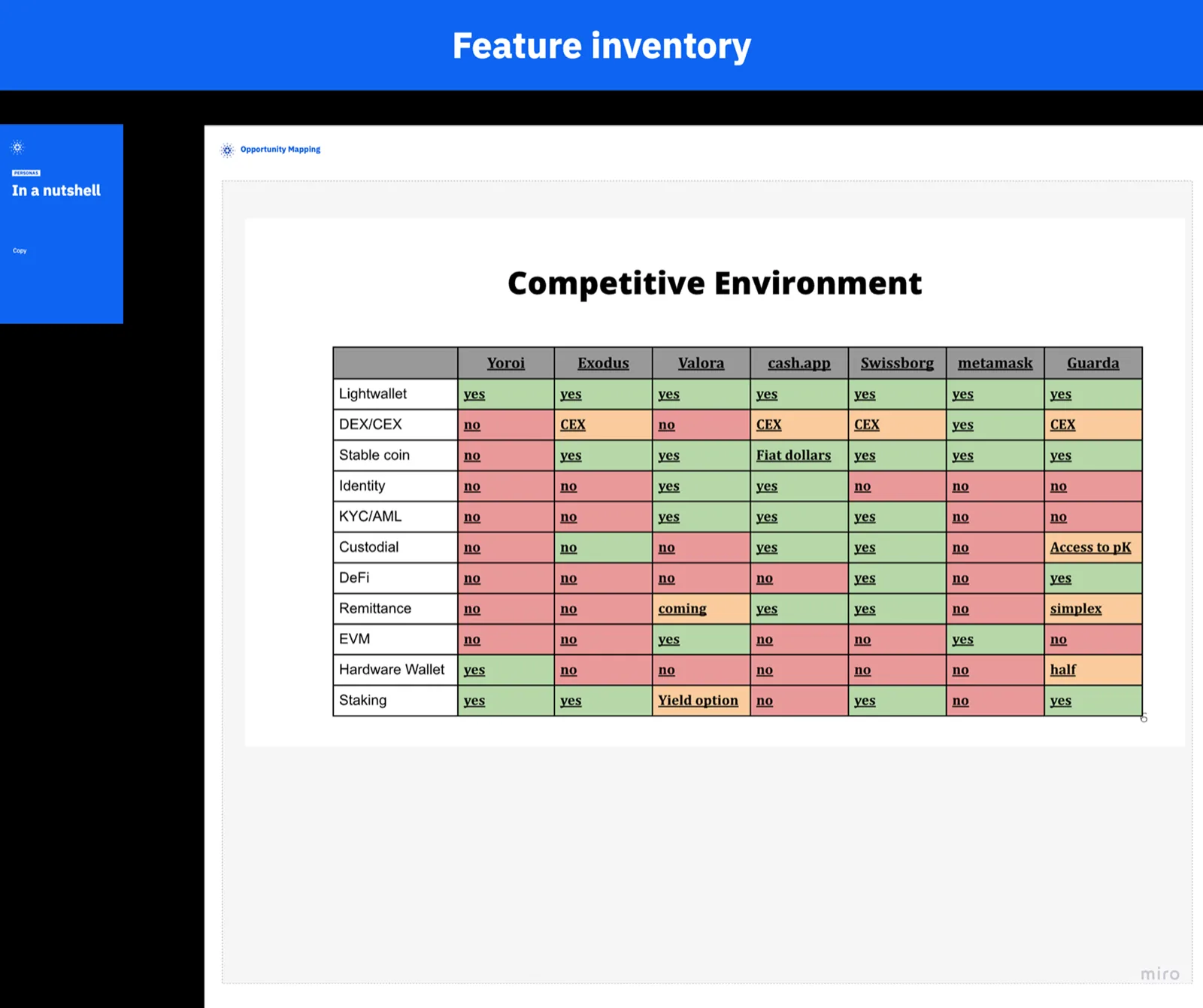
Information architecture forms the backbone of any successful digital product. It's the invisible structure that shapes user experiences and facilitates efficient navigation. After conducting extensive competitive research, we gained valuable insights into how we could enhance our information architecture to better serve our users and outperform our competitors.
- Clear hierarchies, so users can quickly discern the relationships between different pieces of content.
- Simplified navigation that reduces clutter and cognitive load.
- User-centric labels that align with user expectations and needs.
- Robust search functionality with advanced filters.
- Consistency across web and mobile platforms.
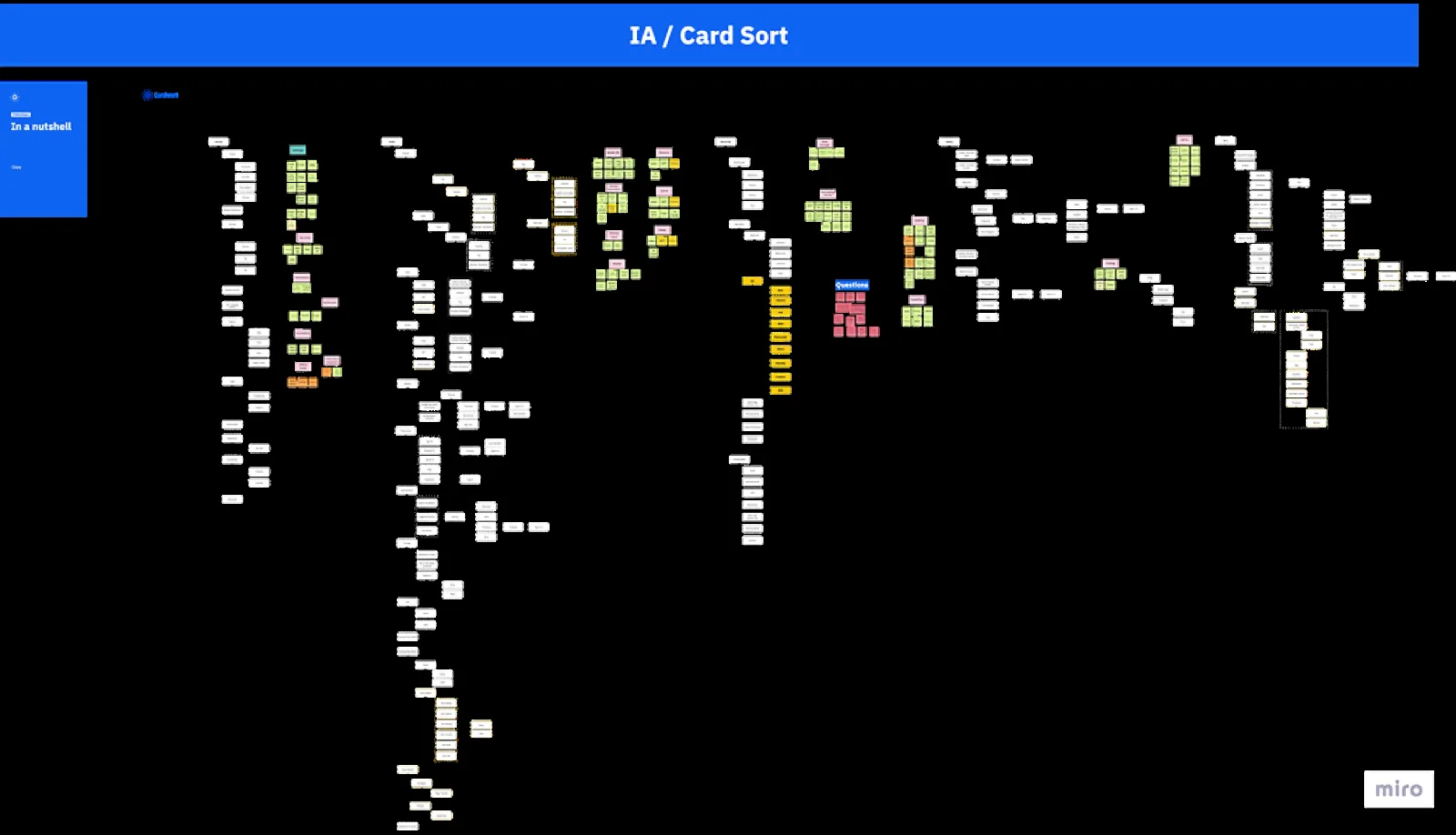
From those insights, we set our own course: prioritize user-centered labels validated through interviews and usability testing, streamline navigation while preserving essential content, invest in search algorithms and advanced filters, make mobile optimization a top priority, and maintain a consistent architecture that transitions seamlessly from web to mobile. To get there, we ran a card sorting exercise.
Understanding our users
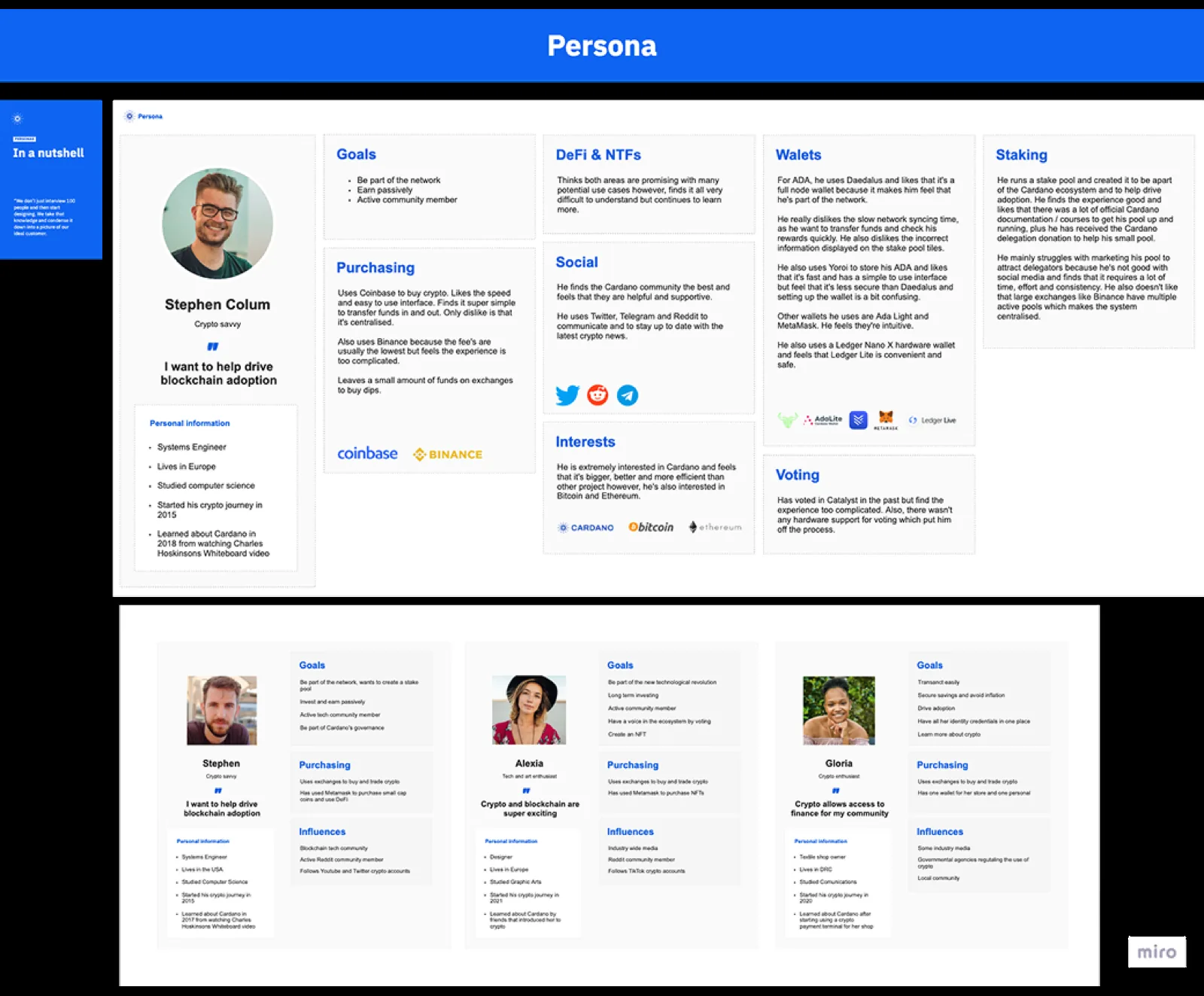
Information architecture is the invisible structure that shapes user experiences and facilitates efficient navigation. After conducting extensive competitive research and talking to our users, we gained valuable insights into how we could enhance our architecture to better serve them and outperform our competitors.
Building for newbies
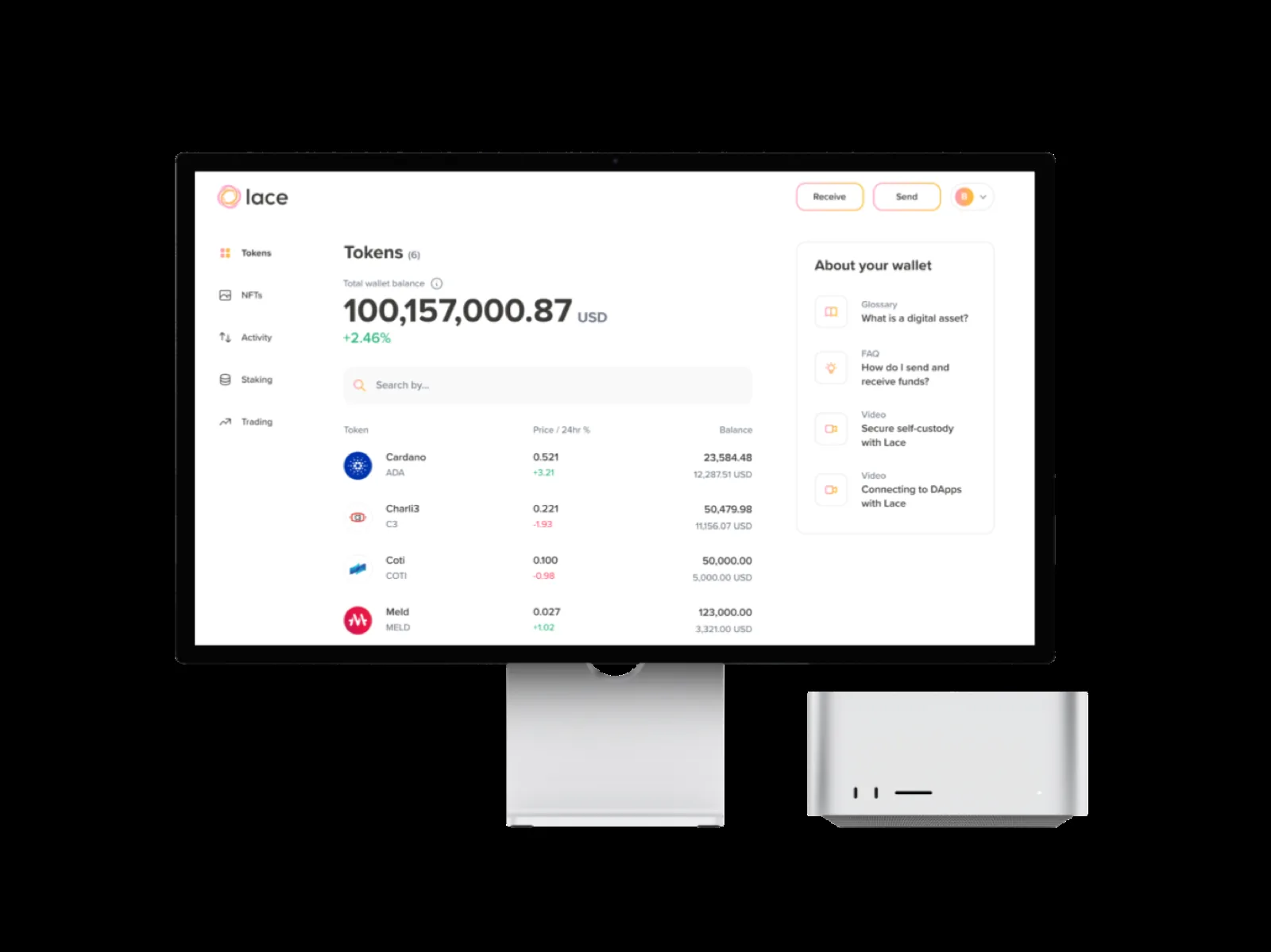
After designing and testing our prototypes with internal and external users during alpha and beta testing, we improved the design by identifying user pain points. We designed an extensive educational hub to demystify the world of cryptocurrencies and blockchain technology. This section serves as a valuable resource for users of all experience levels, with easy-to-follow tutorials covering fundamentals such as setting up a wallet, making a first cryptocurrency purchase, and understanding key blockchain concepts.
Bundle transaction
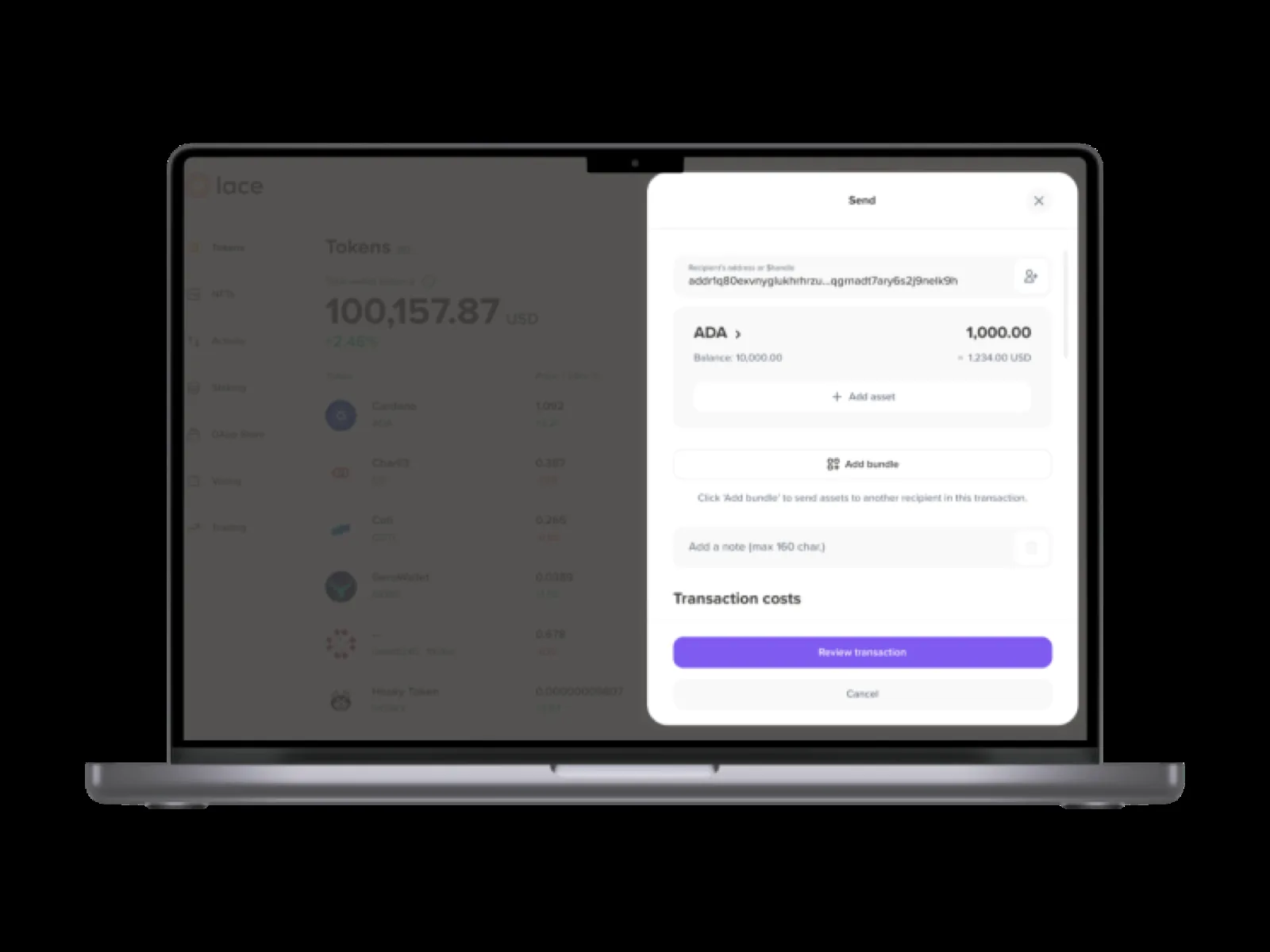
Bundle transactions on the Lace platform offer users a streamlined way to manage their digital assets. This feature combines multiple cryptocurrency transactions into a single bundle, providing cost-efficiency, simplified record-keeping, and potential privacy benefits. Users can customize bundles according to their needs, and Lace provides support to guide them through the process.
Creating the bundle transaction interface presented significant challenges due to its technical complexity, user experience requirements, security considerations, customization options, compatibility with diverse blockchain networks, and the need for robust error handling. These challenges necessitated a meticulous and multidisciplinary approach to ensure the interface is both functional and user-friendly while adhering to the highest standards of security and reliability.
Staking
Staking in the cryptocurrency realm represents a transformative shift in how blockchain networks function. By locking up their assets as collateral, users contribute to network security, participate in consensus mechanisms, earn rewards, engage in governance, and promote environmental sustainability. Staking introduces a dynamic aspect to ownership, requiring users to make informed decisions about network participation and potential rewards.
We aimed to simplify this process to accommodate not only seasoned traders but also newcomers to the ecosystem, so they have as little difficulty as possible grasping the concept and applying it in their crypto journey.
Reflections
Seeing our goals realized is immensely satisfying. We set specific objectives from the start, and we not only met but often exceeded them, thanks to the team's dedication. Of course, we faced challenges, from tight deadlines to unforeseen technical hurdles, but our ability to adapt and collaborate allowed us to overcome them. Personally, I gained valuable insights into project management, problem-solving, and communication, lessons that will benefit future endeavors.